



12 Questions to Ask a Web Designer Before Redesigning Your Website
Your website needs updating. Perhaps it looks dated, isn’t working properly on mobile or isn’t bringing in enough enquiries.
You’ve decided it’s time to speak to a web designer, but how do you know who to choose?
A website redesign is an investment, and the cheapest quotation isn’t always the best value. Before agreeing to anything, it’s worth asking a few questions about how the work will be carried out, what you’re paying for and what happens after the new website goes live.
Here are 12 questions I’d recommend asking any web designer before committing to a project.
1. Do I Actually Need a Complete Website Redesign?
This should be one of your first questions.
Not every website needs rebuilding. Sometimes the existing site has a perfectly good foundation but needs clearer content, better navigation, updated photographs or improved mobile usability.
A good web designer should look at what you’ve already got before recommending a replacement.
Ask them what isn’t working and whether those problems can be fixed without starting again.
If your website is difficult to maintain, relies on outdated software or needs major structural changes, a redesign may make more financial sense.
My advice: Be cautious if someone recommends a completely new website without first asking about your current site and what you want to achieve.
You may also find my guide, Does My Small Business Website Need a Redesign?, helpful before making that decision.
2. Have You Designed Websites for Businesses Like Mine?
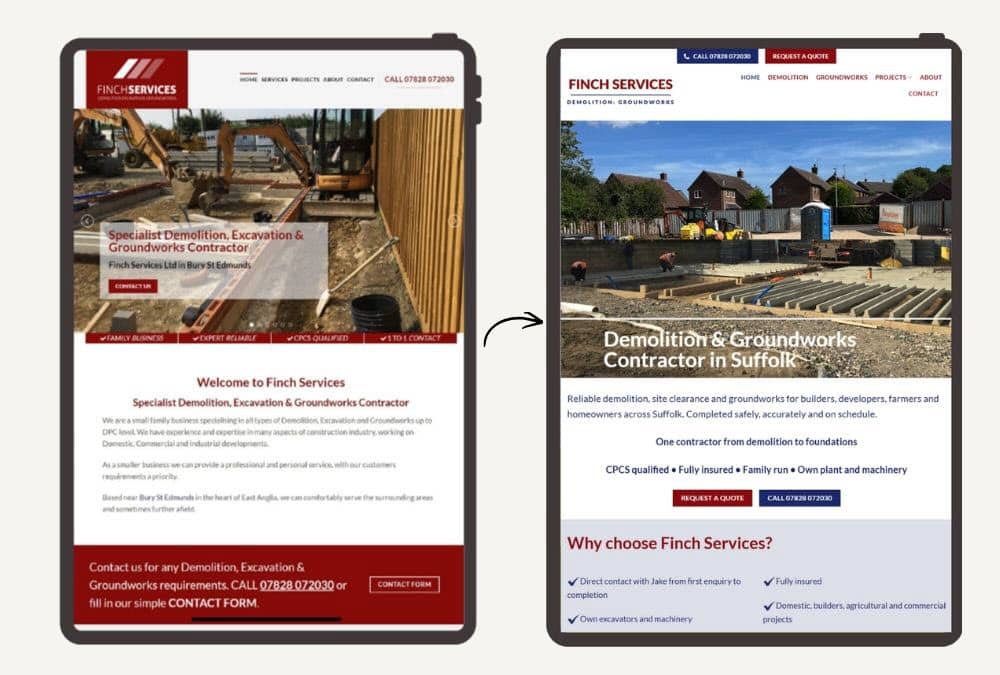
A website for a building contractor has different requirements from one for a plant nursery, healthcare clinic or holiday rental.
A builder needs to showcase completed projects and encourage quotation requests. A clinic needs clear treatment information and straightforward appointment booking. A plant nursery needs to help customers find seasonal stock, opening hours and directions.
Ask to see examples of previous work.
Look beyond the colours and photographs. Can you understand what each business does? Are the services easy to find? Is there a clear way to make contact?
You don’t necessarily need a designer who specialises in your industry, but they should understand how your customers choose who to contact.
My advice: Ask the designer to explain why they made particular decisions on a previous project. You’ll learn more from that than simply looking at attractive screenshots.
You can see examples of websites I’ve created for Suffolk businesses in my web design portfolio.
3. Who Will Actually Be Designing My Website?
This is particularly important when comparing a freelance web designer with a larger agency.
Will you speak directly to the person designing and building your website, or will your instructions pass through an account manager?
Who will make changes if you spot something that needs adjusting?
Who will answer your questions during the project?
There’s nothing wrong with an agency approach, but you should know how communication will work.
When you work with me at Afford Web Design, you deal directly with me throughout the project. I get to know your business, discuss what your customers need and carry out the website work myself.
My advice: Choose someone you’re comfortable asking questions. Website projects involve decisions about content, design and functionality, so good communication matters.
4. What’s Included in the Website Redesign Price?
Two website quotations can look similar but include very different amounts of work.
One designer may be quoting for a new layout using your existing content. Another may include rewriting pages, restructuring services, improving mobile usability and preparing the website for search engines.
Ask exactly what’s included.
- Things worth checking include:
- Number of pages
- Website design and development
- Content writing or editing
- Mobile and tablet layouts
- Contact forms
- Image resizing and optimisation
- Basic on-page SEO
- Existing page redirects
- Testing before launch
- Training to make updates
- Revisions during the project
Also ask what would cost extra.
For example, adding an online shop, booking system or several additional service pages could change the price.
My advice: Ask for a written quotation explaining the work included. It makes comparing different designers much easier.
5. Will I Own My Website When It’s Finished?
This is a question every small business owner should ask.
Your website is an important business asset. You should understand who controls it.
Check who owns or controls:
- Your domain name
- Your website content and photographs
- Your hosting account
- Your WordPress installation
- Any premium themes or plugins
- Your website backups
Also ask whether you can move the website to another hosting company or appoint a different developer in the future.
Some website packages involve ongoing subscriptions where access, software licences or continued use of the website depend on the agreement.
That isn’t necessarily a problem, but you should understand the conditions before signing up.
My advice: Make sure you know what happens to your website if you decide to stop using the designer’s services.
6. Will My Existing Google Rankings Be Protected?
If your current website already appears in Google, you don’t want to lose valuable search visibility unnecessarily.
A redesign can change page addresses, headings, content, navigation and internal links.
If these changes aren’t handled carefully, Google may struggle to find pages that previously appeared in search results.
Ask your web designer how they plan to deal with:
- Existing page URLs
- 301 redirects
- Important service pages
- Page titles and descriptions
- Internal links
- XML sitemaps
- Google Search Console
- Existing content that attracts visitors
Nobody can guarantee that rankings will stay exactly the same after a redesign. Search results change for many reasons.
But an experienced designer should have a plan to reduce avoidable problems.
My advice: If your website already brings in enquiries through Google, make sure SEO is considered before the redesign starts, not added as an afterthought.
7. Will the New Website Help Local Customers Find Me?
For many Suffolk businesses, being found by nearby customers is more important than attracting visitors from across the country.
A builder in Stowmarket may want enquiries from homeowners in Bury St Edmunds, Ipswich and surrounding villages.
A local clinic may want patients searching for particular treatments nearby.
Ask how the new website will support your local search visibility.
That might include:
- Clear service pages
- Accurate business contact details
- Relevant location information
- Descriptive page headings
- Internal links
- Google Business Profile integration
- Useful content answering customer questions
A website redesign alone won’t guarantee better Google rankings. Local SEO involves more than the appearance of your website.
My advice: Ask what SEO work is included in the redesign and what would require a separate Local SEO in Suffolk service.
8. Will My Website Work Properly on Mobile Phones?
Most web designers will tell you their websites are mobile-friendly.
Ask what that actually means.
A website can technically fit on a phone while still being frustrating to use.
Check whether the designer considers:
- Readable text
- Simple mobile navigation
- Easy-to-tap buttons
- Clear contact options
- Short, usable forms
- Appropriately sized images
- Fast-loading pages
- Layouts that work on different screen sizes
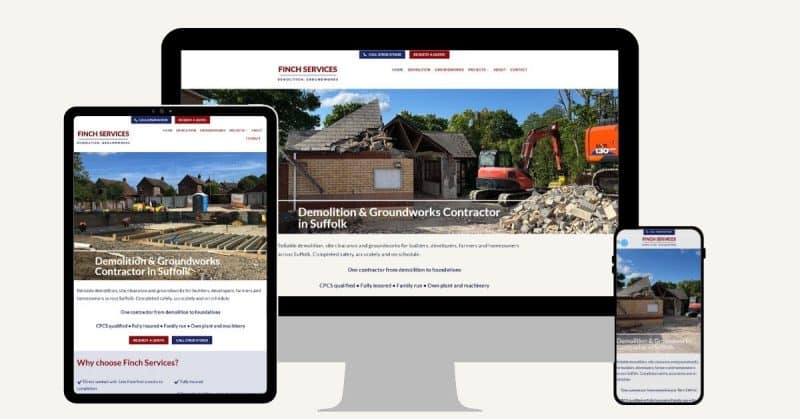
Ask to see some of their previous websites on your own phone.
Try using the menu, finding a service and completing a contact form.
My advice: Don’t judge a website solely from a desktop screenshot. Your customers need to be able to use it comfortably on their own devices.
For more practical checks, read Mobile-First Web Design for Small Businesses in Suffolk.
9. Will I Be Able to Update the Website Myself?
Your business won’t stand still after the website goes live.
You might need to change opening hours, add a project, update prices, replace photographs or introduce a new service.
Ask how easy those changes will be.
Will you be able to edit text and images yourself? Will you receive any guidance? Are there areas that require a developer?
I work primarily with WordPress because it provides a flexible way to manage website content and add functionality as a business develops.
You don’t have to make every change yourself, but you should have that option for straightforward updates.
My advice: Ask the designer to demonstrate how a typical content change will work before you commit.
10. What Happens After the Website Goes Live?
Launching a website isn’t the end of the work.
WordPress, themes and plugins need updating. Backups need checking. Forms can stop working, and occasional problems need investigating.
Ask whether the designer provides ongoing support and what it costs.
Useful questions include:
- Who updates WordPress and plugins?
- Are regular backups included?
- Who checks for security issues?
- What happens if the website stops working?
- Can I request content changes?
- Is support charged monthly or as needed?
- How quickly are support requests usually handled?
Not every business needs a monthly maintenance plan, but every website needs someone responsible for looking after it.
My advice: Don’t assume ongoing maintenance is included in the redesign price. Ask before the project starts.
I offer WordPress Maintenance for businesses that would rather have someone experienced looking after the technical side of their website.
11. How Long Will the Redesign Take?
Website redesigns vary in size.
A small business website with a handful of pages is different from a large site with dozens of services, project galleries or specialist functionality.
Ask for an estimated timescale and find out what the designer needs from you.
Delays often happen because photographs, text, approvals or other information aren’t ready when needed.
Check:
- When the project can start
- What information you need to supply
- When you’ll see the first design
- How revisions are handled
- Who approves the finished website
- How the launch will be managed
My advice: A realistic timescale with clear responsibilities is more useful than a promise to finish everything unusually quickly.
12. How Will We Know Whether the New Website Is Better?
A redesign should achieve more than a fresh appearance.
Before work starts, agree on what needs improving.
For a Suffolk building contractor, that might mean making quotation requests easier and giving completed projects more prominence.
For a healthcare clinic, it could mean clearer treatment information and a simpler route to booking appointments.
For a retailer, the priority may be helping customers find products, opening hours and directions.
Useful measures might include:
- Enquiries through contact forms
- Telephone link clicks
- Appointment bookings
- Visits to important service pages
- Website performance on mobile
- Organic search traffic
- Visibility for relevant local searches
Not every improvement can be measured immediately, and no designer can guarantee a particular number of enquiries.
But you should know what the website is being designed to achieve.
My advice: Ask the designer to explain how the proposed changes will help your customers, rather than simply telling you the new website will look more modern.
What Should You Expect From a Good Web Designer?
You should expect clear answers, a written explanation of the work and an interest in understanding your business.
You shouldn’t need to understand WordPress, hosting or technical SEO before asking questions.
A good web designer should be able to explain these things in plain English and help you make sensible decisions about your website.
If someone can’t explain why they’re recommending a particular change, ask them to clarify.
Questions to Take to Your First Website Meeting
Keep this checklist handy when comparing designers.
- Does my website need redesigning or can it be improved?
- Can I see examples of similar projects?
- Who will actually do the work?
- What’s included in the quotation?
- Will I own and control my website?
- How will existing SEO and page URLs be handled?
- What Local SEO work is included?
- Will the website be easy to use on mobile?
- Can I update the website myself?
- What support is available after launch?
- How long will the project take?
- How will we assess whether the redesign has improved the website?
Thinking About Redesigning Your Small Business Website?
I’m Anne, the freelance web designer behind Afford Web Design, based near Bury St Edmunds in Suffolk.
I’ve been designing and developing websites for over 20 years, working directly with small businesses that need practical advice and websites that make it easier for customers to get in touch.
If you’re considering a redesign, I’ll look at your existing website first.
You may need clearer service pages, a better mobile layout, improved Local SEO or help keeping WordPress updated. If the website can be improved without rebuilding it, I’ll tell you.
Or call 07825 322693
Website Services for Small Businesses in Suffolk
Small Business Web Design in Suffolk
For businesses that need a new WordPress website built around their services and customers.
Website Redesign in Suffolk
Improving existing websites that no longer meet the needs of the business.
WordPress Maintenance
Ongoing updates, backups, security checks and website support.
Local SEO in Suffolk
Helping small businesses improve their visibility when local customers search for their services.